 EN
EN  ID
ID MY
MY SG
SG
There are many ways to achieve success especially when you want to establish your business as a market leader or build personal branding. One of them is by writing an op-ed.
So, what is an op-ed? In this article, we’ll cover it thoroughly from its definition and importance to how to write one. Let’s dive in!
What is an Op-Ed?
An op-ed is an opinion article published in mass media. It is usually written by a prominent figure or an expert in a particular field. The purpose is to share their perspective on a specific issue, with the hope of influencing readers’ perceptions or even shaping public policy.

The term op-ed itself stands for “opposite the editorial page,” originally referring to where the article was placed in print media. In Indonesian, op-eds are often referred to as “editorials” or “opinion pieces” (tajuk opini).
Why Are Op-Eds Important?
At first glance, opinion articles may seem simple. However, don’t be mistaken op-eds are actually highly competitive.
In general, not every opinion gets published, especially when it comes to major media outlets such as Kompas, Tempo, and Jawa Pos.
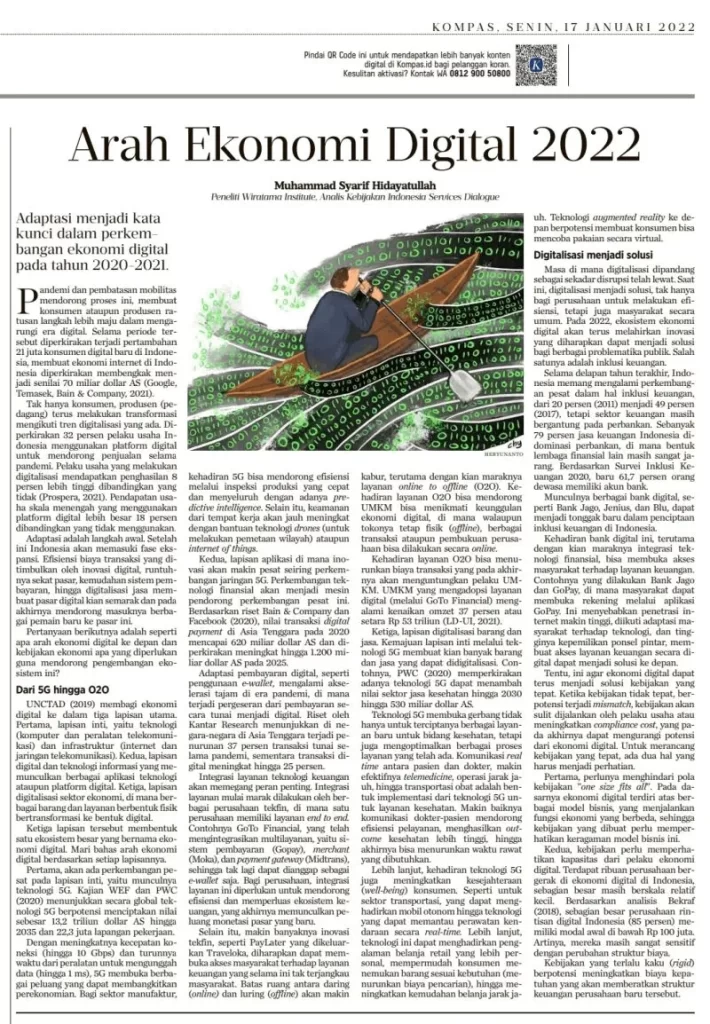
Additionally, many groups compete for this column from business owners and politicians to academics and other strategic figures. So, what are the reasons behind it?
- Clarifying brand positioning: An op-ed can be used to clearly communicate the strengths of a business or organization especially in highly competitive markets with many similar players.
- Building expert reputation: Writing an op-ed isn’t arbitrary. It requires relevant data or experience to support the argument. That’s why getting published in major media can establish the writer or organization as an authority.
- Gaining wider exposure: Op-eds published in well-known media outlets can attract a larger and higher-quality audience.
- Adding a personal touch: Since op-eds are written by individuals, the tone is more personal compared to formal public relations press releases. This personal angle helps build trust especially when combined with strong storytelling.
How to Write an Op-Ed
So, how do you write a compelling and effective op-ed? Check out these tips:
1. Understand the Format and Characteristics of a Good Op-Ed
Before jumping into writing, it’s a good idea to study articles that have already been published in major media outlets. This will help you craft a strong structure and flow for your own piece.
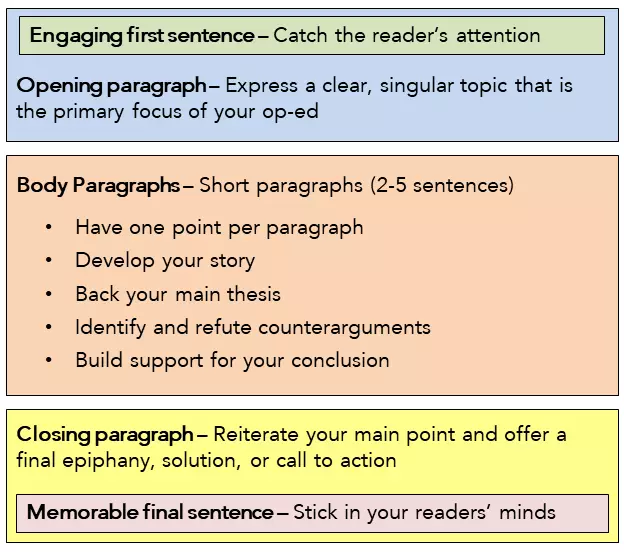
This way, you won’t need to go through repeated trial and error or constant revisions.
2. Leverage Momentum
Mass media prioritize timely and актуal topics. That’s why it’s more strategic to write an op-ed about issues that are currently trending. This increases the chances of your article being read by a wider audience.
3. Put Your Main Point First
Human attention spans are very short around eight seconds. That’s why you need to be direct. Present your main idea right at the beginning of the article.
4. Explain Why Your Writing Matters
Everything competes for attention especially in today’s social media era.
That’s why you need to clearly explain why your opinion matters. Provide context, background, and supporting data so readers understand the relevance of your perspective.
5. Provide Specific Recommendations
Unlike news articles that are descriptive and balanced, op-eds should be firm, take a stance, and offer clear recommendations. Why? Because at its core, an op-ed is meant to influence readers.
With specific recommendations, relevant parties can take further action whether by responding with another op-ed, holding discussions, or even changing policies.
6. Use the “Show, Don’t Tell” Principle
Writing an op-ed based on data is excellent it shows your argument is grounded in real issues.
However, too much data can overwhelm readers. Instead of persuading them, it might distract or confuse them.
That’s why storytelling is important. Apply the “show, don’t tell” principle, present your data in a way that’s engaging, such as through analogies or metaphors.
Ready to Publish Your Own Op-Ed?
If you want to position yourself as an expert and strengthen your business branding, writing an op-ed can be a great strategy.
No need to worry about publication. With seedbacklink, you can publish your opinion pieces in major media outlets and even choose the platforms yourself.
Simply deposit to the platform and wait just 1–3 days for your article to go live. Sounds great, right?